


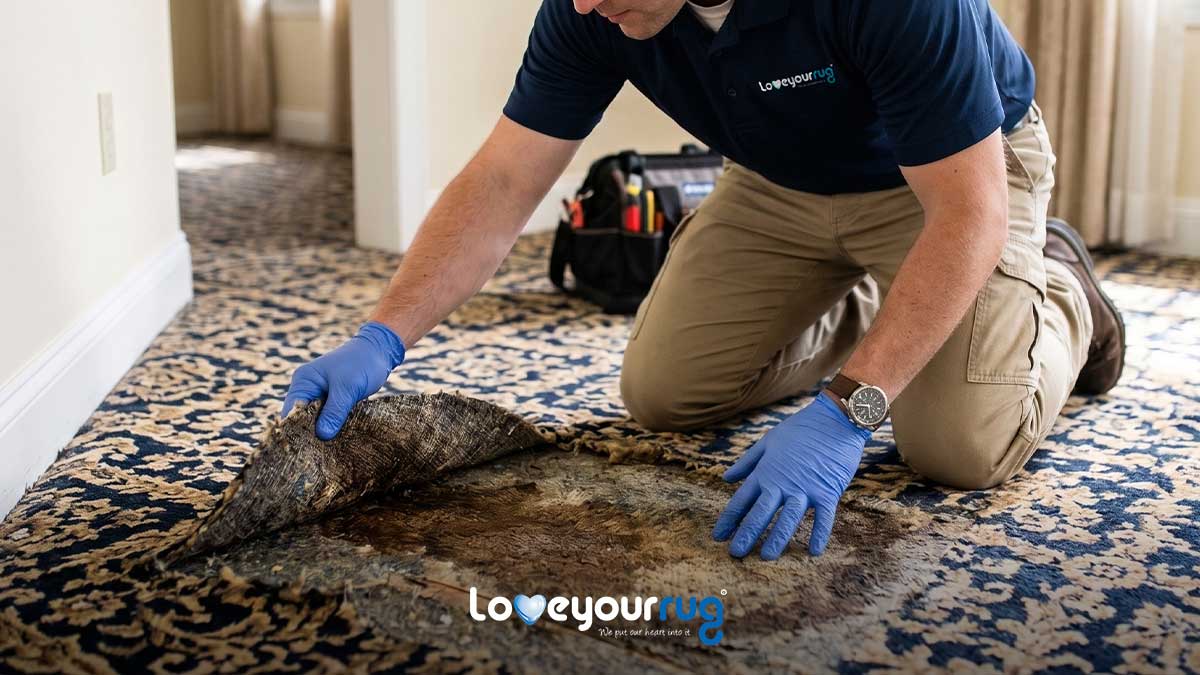
Ottawa summers push indoor air close to saturation. In July, the region’s monthly maximum relative humidity climbs to somewhere between 91 and 100%, and all that vapour presses inward through walls and floor assemblies. Carpets sit directly in its path. The connection between Ottawa humidity and carpet mould comes down to something you can actually measure: how wet the fibres and padding get, and how long they stay that way.
Does Humidity Cause Mould In Carpet?
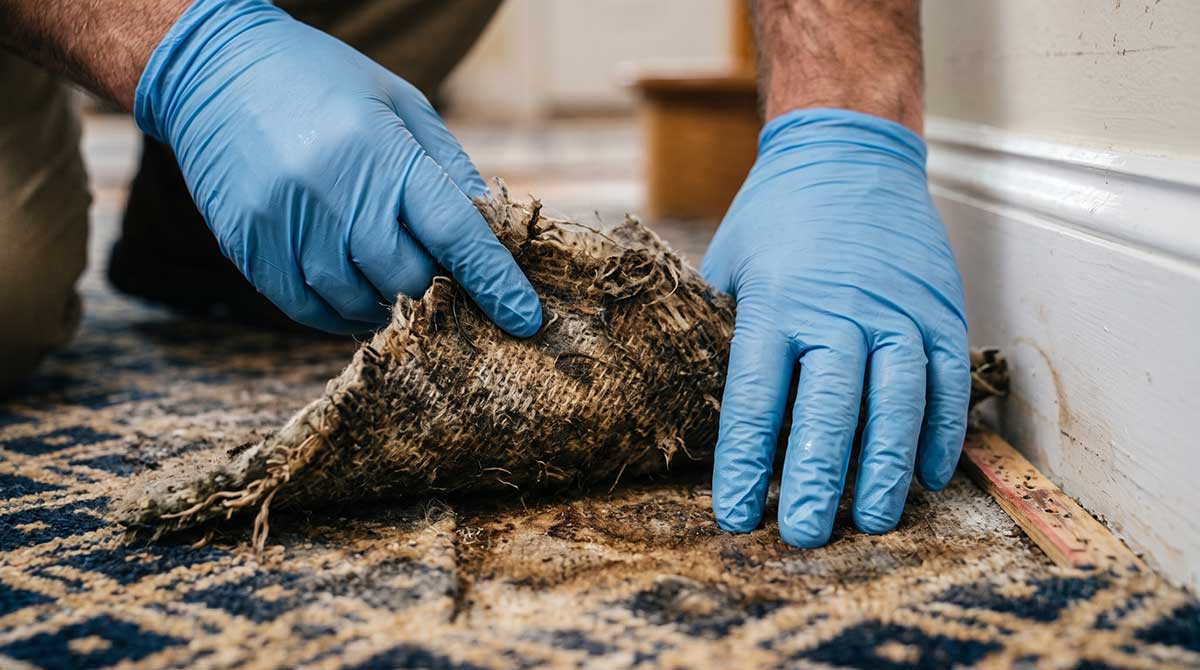
Yes, although it works indirectly. Fungal growth needs four things at the same time: a temperature between 5.5°C and 55°C, live spores, a food source, and surface water activity above 0.65. Ordinary indoor temperatures of 18.5°C to 22°C already fall inside the range fungi favour. Spores drift through the air everywhere, indoors and out. Carpet gathers nutrients no matter how tidy a room looks. That leaves moisture as the one factor you control. Push the humidity near a carpet surface high enough, and the water activity crosses 0.65, waking spores that were sitting dormant.
The trouble often hides at the boundary layer. When a concrete slab or an uninsulated wall turns cold, the thin band of air touching it holds less vapour before condensing, so humidity spikes right there even when the room’s overall reading seems safe. Nighttime thermostat setbacks make it worse. Drop the indoor temperature by 3°C to 5°C after dark, and the air near cold surfaces can reach 70% humidity or higher, plenty to trigger growth on the carpet beside it.
Ottawa Humidity Levels Through the Year
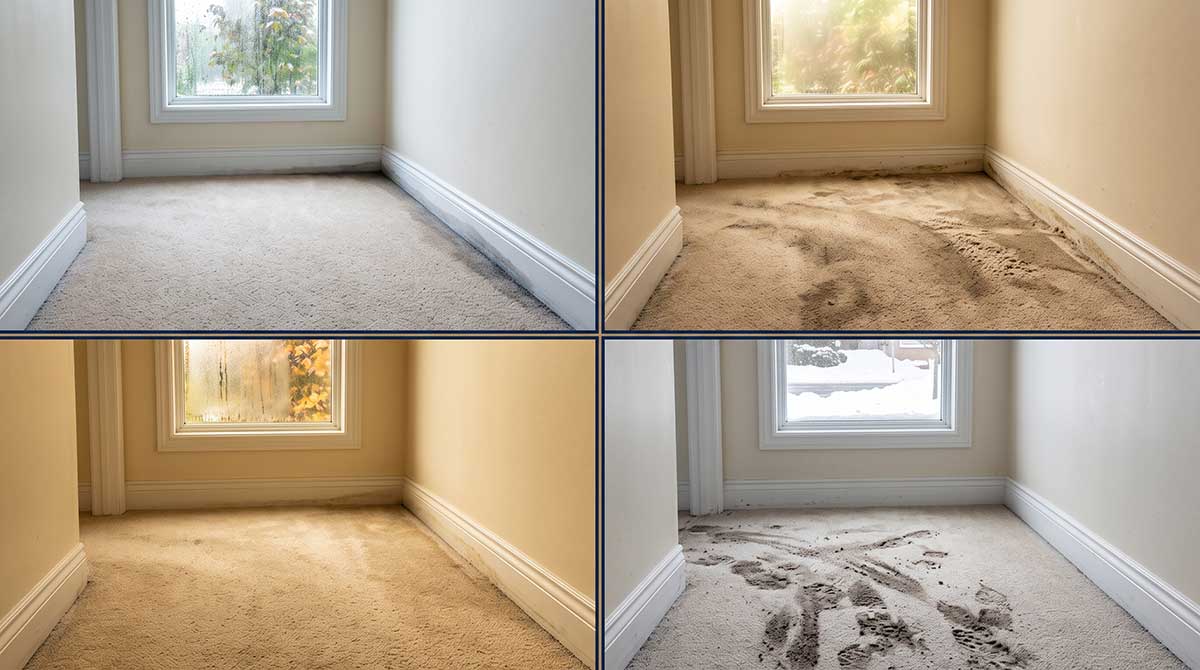
Each season loads a home in its own way, and the risk to carpet rises and falls with it.
| Season | Typical Moisture Risk | Common Causes | Mold Risk |
| Spring | High water table, hydrostatic pressure | Snowmelt, heavy rain, foundation cracks | High |
| Summer | Humid air, condensation on cool slabs | Damp basements, warm currents | Very High |
| Autumn | Rising indoor humidity | Temperature drops, homes sealed for heating | Moderate |
| Winter | Surface condensation, tracked slush | Wet footwear, unvented indoor drying | Moderate |
Summer carries the heaviest load. Warm, humid air meets a basement slab holding steady near 13°C, the boundary air cools, and local humidity above the concrete climbs past 70%. Water then condenses under the carpet where nobody sees it.
How Mould Growth In Carpets Begins
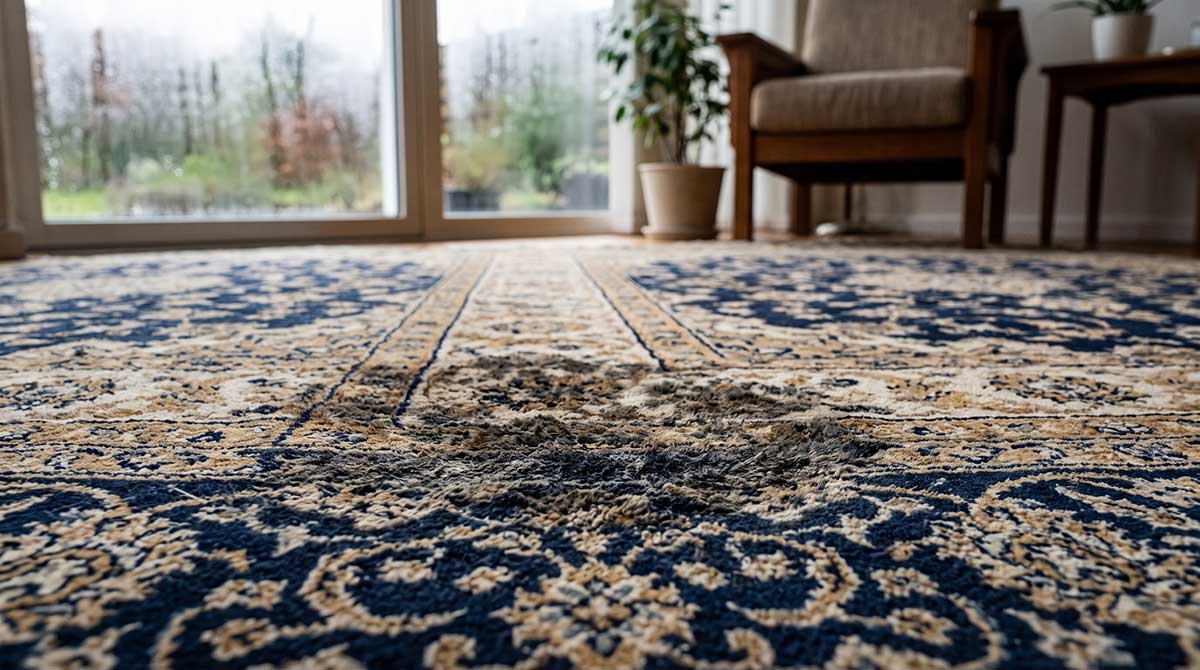
Synthetic fibres such as nylon and polyester do not feed fungi on their own. The problem is what carpet collects and holds. Its dense weave and the foam pad beneath it soak up water readily yet release it slowly, and almost no air moves under the backing to help it dry. Once liquid reaches the pad, it pools and lingers. Leave it 24 to 48 hours and a humid little microclimate forms, ideal for spores to germinate.
Moisture reaches carpet through several routes:
- Capillary rise through bare concrete, since carpets act as physical traps that collect organic dust and settled soil that later feed fungi once the pad turns damp1
- Spring freshet pushing groundwater through foundation cracks and window wells
- Leaking pipes, overflowing sinks, and repeat pet accidents that add water along with concentrated nutrients
- Tracked snow carrying road salt, which keeps fibres damp even when indoor air feels dry
Two early signs are worth watching for. A musty, earthy smell usually means active growth beneath the backing well before any stain appears, and dark streaks along baseboards mark where cold drafts drag moisture and dust into the carpet edge.
Carpet Mould Prevention
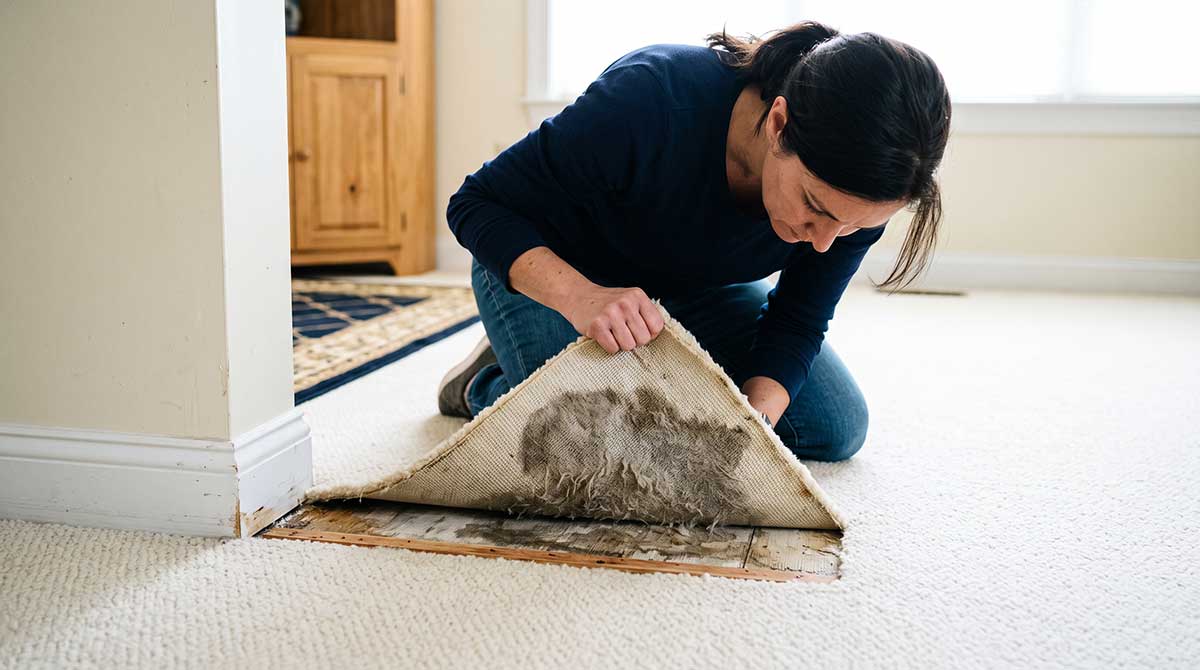
Good mould prevention starts with humidity. Health Canada and Public Health Ontario advise keeping indoor relative humidity between 30 and 50%; hold it under 50 and carpet-surface water activity stays below the 0.65 germination threshold. During deep cold snaps, the ceiling drops further, down toward 20% when it hits -28°C outside, which stops condensation from forming on windows and framing and running into nearby carpet.
A few habits keep textiles dry year-round:
- Run a dehumidifier in below-grade rooms from May through October, aiming near 50%
- Set humidifiers and HRV or ERV systems lower as outdoor temperatures fall
- Lay water-resistant walk-off mats at every entry and take footwear off at the door
- Skip wall-to-wall carpet over bare basement slabs, or add a vapour barrier subfloor
- Vacuum weekly with a machine that traps fine dust and fungal spores rather than blowing them back out2
Carpet Mould Removal in Ottawa
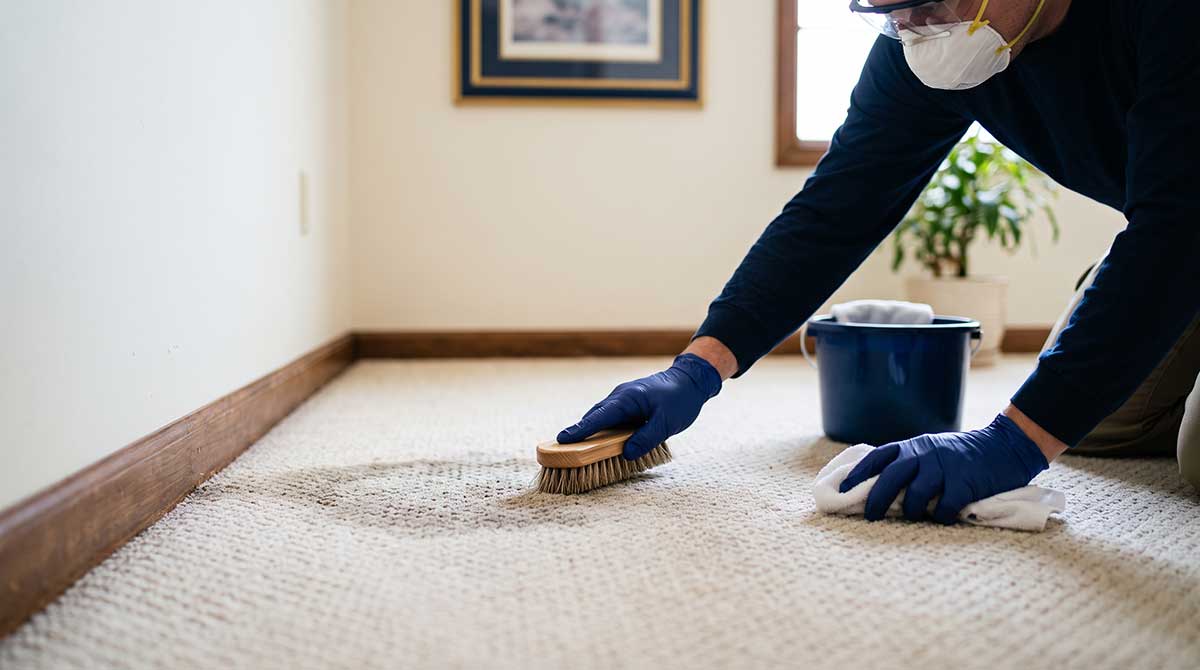
Small jobs are manageable at home. After any leak or spill, the clock is what counts, since water pulled out and dried within 24 to 48 hours rarely becomes a colony. Health Canada and CMHC sort growth by size, and a patch under a square metre calls for gloves, goggles, and an N95 while you scrub hard surfaces with warm water and unscented detergent.
Soaked porous material behaves differently; padding, drywall, and insulation that stay wet should be bagged and discarded rather than salvaged. Bleach gets waved off by both agencies, since it corrodes, irritates the lungs, and does nothing about the moisture underneath. Larger contamination, roughly a sheet of plywood or more, belongs with a certified remediator.
If you would rather not handle it yourself, our team offers eco-friendly carpet cleaning that clears the growth without harsh chemistry.
Professional Carpet Cleaning in Ottawa
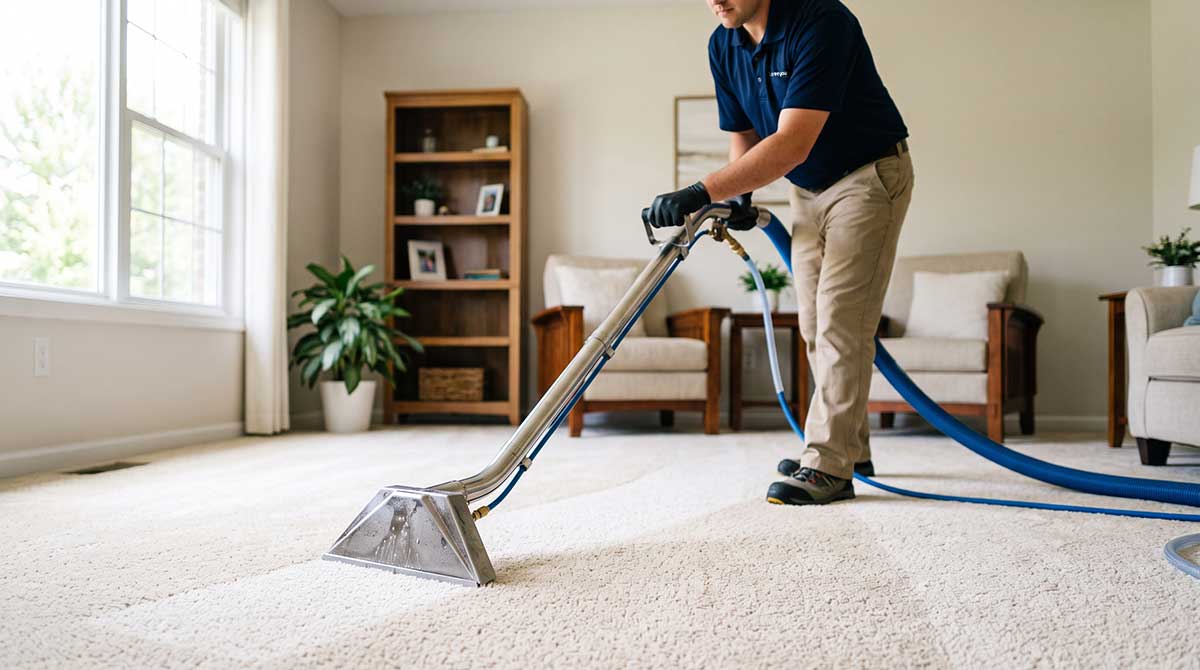
Even a dry, well-kept carpet benefits from a deep clean every 12 to 18 months. Hot water extraction, the method most manufacturers back, runs pressurized water at 65°C to 93°C to lift embedded soil and kill surface spores. The catch is over-wetting: leftover water in the backing invites the very mould you are trying to remove. Truck-mounted systems recover up to 95% of the applied water and leave the carpet damp instead of soaked, and air movers should finish the drying within 12 hours.
Booking carpet cleaning in Ottawa with technicians who dry properly keeps a routine service from turning into a moisture problem.
Ready to protect your carpets before the next humid season? Get a quote from our Ottawa team today.
References
- Jacobs, David E., et al. Carpets and Healthy Homes. National Center for Healthy Housing, n.d.
- “Controlling Pollutants and Sources: Indoor Air Quality Design Tools for Schools | US EPA.” US EPA, 13 Jan. 2026, www.epa.gov/iaq-schools/controlling-pollutants-and-sources-indoor-air-quality-design-tools-schools.

Condo Living in Ottawa: Smart Rug Choices & Maintenance Tips
Ottawa’s condo towers pack thousands of residents into concrete and glass buildings that behave nothing like a detached house. Floors sit on shared slabs, hallways answer to fire code rules,

Ottawa Allergy Season: Can Dirty Carpets Make It Worse?
Seasonal allergic rhinitis affects roughly one in five people across Canada, and Ottawa sits well within that range. Clinics see more itchy eyes and sneezing every spring, mostly blamed on