


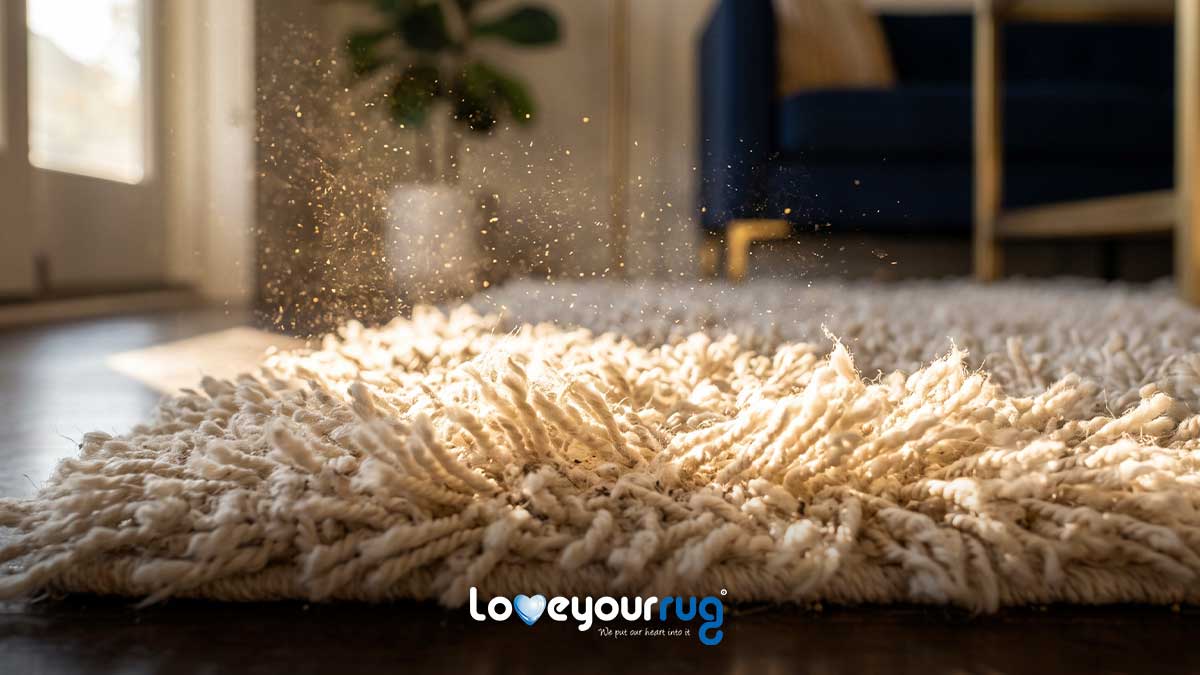
Seasonal allergic rhinitis affects roughly one in five people across Canada, and Ottawa sits well within that range. Clinics see more itchy eyes and sneezing every spring, mostly blamed on outdoor pollen. Fewer people consider what happens once that pollen gets inside the house. Ottawa allergy season carpets pick up far more than muddy boot prints. They collect pollen, pet dander, dust mite waste, and mould spores, then release some of it back into the air with every footstep.
Seasonal Allergies In Ottawa: What Triggers Them
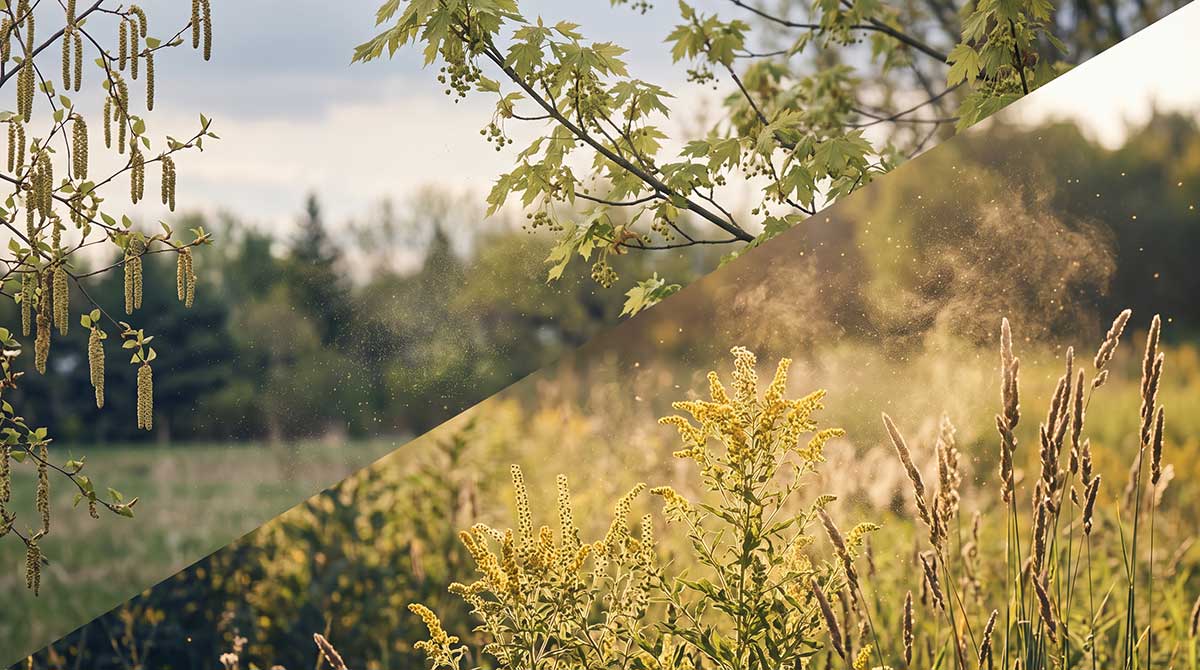
Seasonal allergies follow a fairly predictable calendar. Birch, oak, maple, and cedar pollen dominate March through May as temperatures climb and snow melts. Grass pollen takes over from May into July and ranks among the biggest triggers for allergic rhinitis across Ontario. Ragweed follows from August through October and lingers until the first hard frost. Mould spores stay elevated for most of the year, spiking during humid stretches or right after rain. Warm, dry, windy days lift more pollen into circulation, while rain knocks it down but adds humidity that can fuel mould later.
How Carpets Trap And Release Carpet Allergens In Ottawa Homes
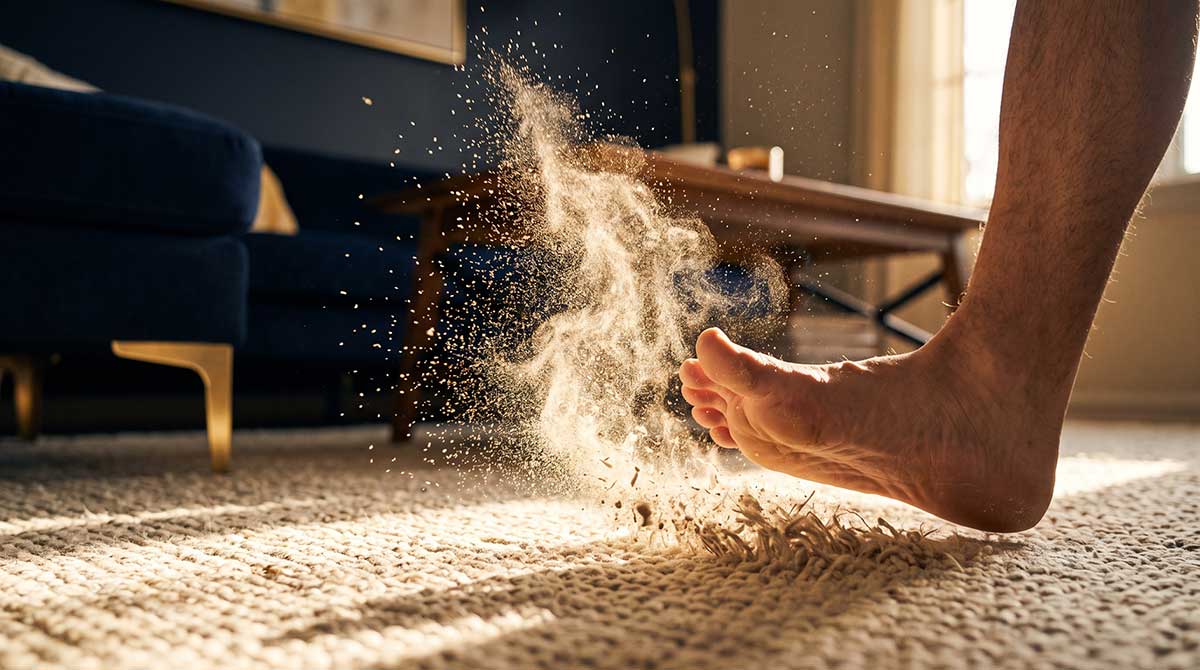
Outdoor particles get inside through open windows, weak HVAC filtration, gaps around doors, and simply on clothing, footwear, and pet fur. Once pollen settles onto a carpet, the fibre network holds onto it. That trapping effect is real to a point, since carpet keeps particles out of the air compared with a bare floor, a point the Carpet and Rug Institute has highlighted.1 The catch is foot traffic. Walking across a contaminated carpet can push tens of millions of particles per minute into breathing height, and closer still for a crawling infant. A carpet that never gets proper carpet cleaning ends up storing months of pollen and dander, feeding it back with every step.
What Builds Up In Ottawa Carpets During Allergy Season
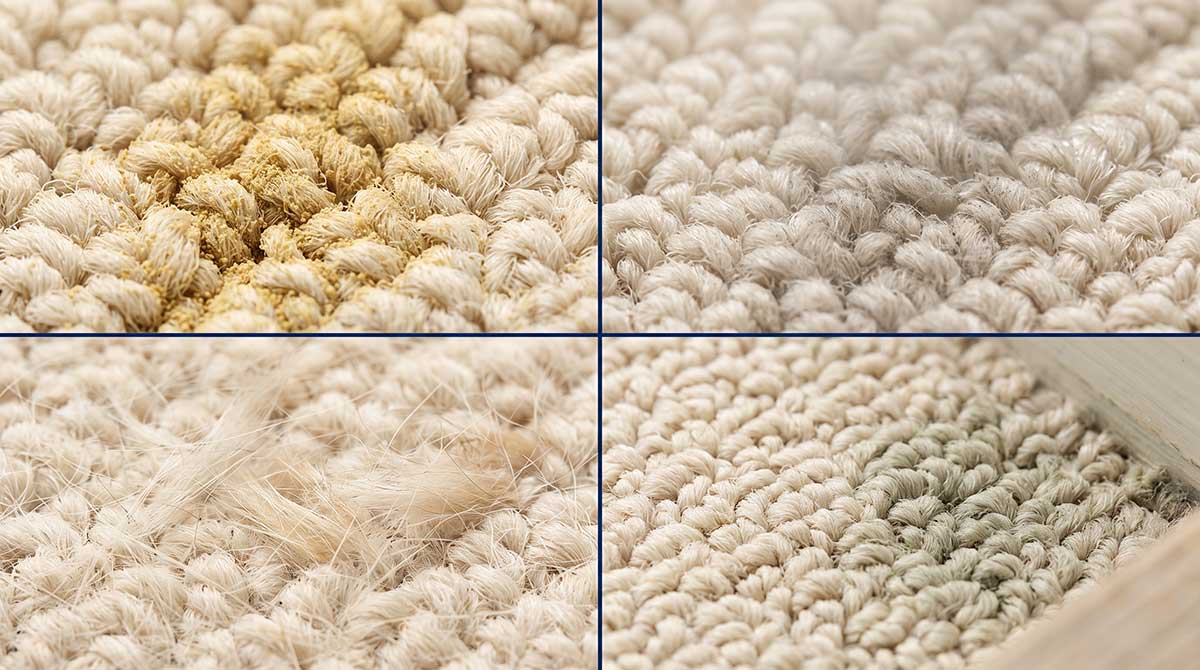
A handful of categories account for most of what builds up in carpet fibre over a season.
| Allergen | Where It Comes From | What Helps |
| Pollen | Windows, footwear, and pets | Shoe removal, closed windows on high count days |
| Dust mites in carpet | Humidity above fifty percent, shed skin flakes | Humidity kept between thirty and fifty percent |
| Pet dander | Fur and skin flakes | Regular bathing and HEPA vacuuming |
| Mould spores | Damp basements, past water damage | Fast, complete drying after any leak |
Do Dirty Carpets Make Allergies Worse?
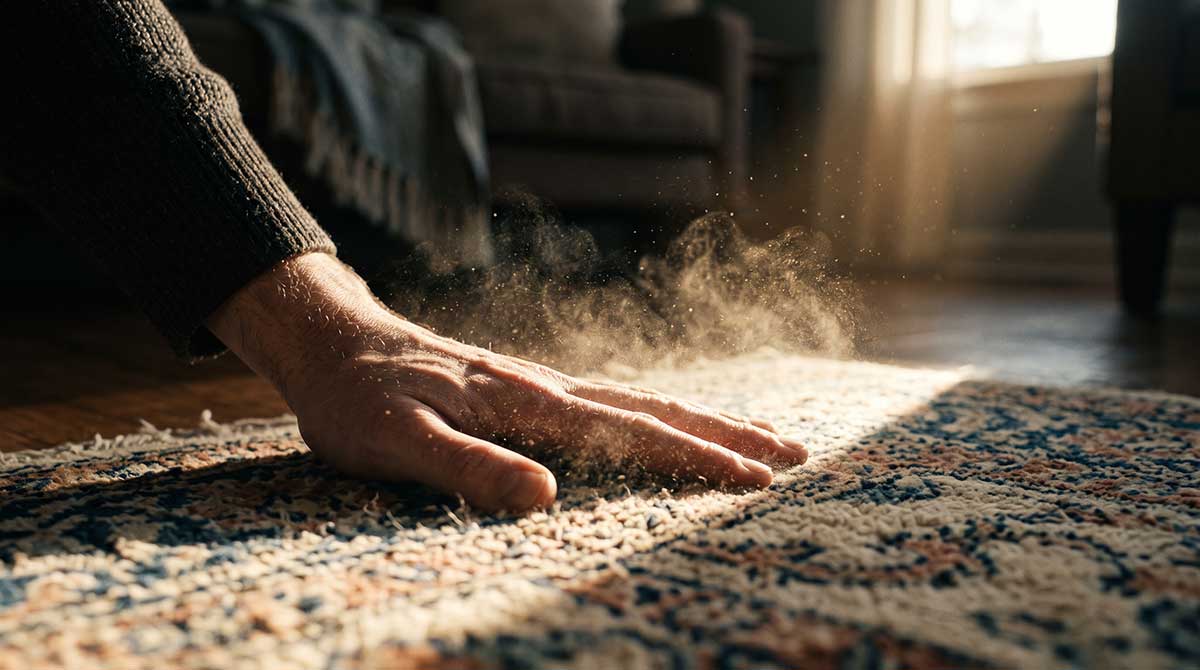
A dirty carpet does not create a pollen or dust mite allergy on its own. Only someone already sensitized reacts, and symptoms appear once inhaled allergens exceed that person’s own threshold. Carpet condition affects how close a household sits to that threshold. Outdoor pollen already adds to total exposure during allergy season, and a carpet storing months of that waste adds a steady indoor dose on top. For someone near the edge of a flare, that extra load can turn a mild afternoon into a miserable one. Poor carpet maintenance will not cause seasonal allergies, though it can make an existing season noticeably harder.
Carpet Cleaning For Allergies: What Actually Works
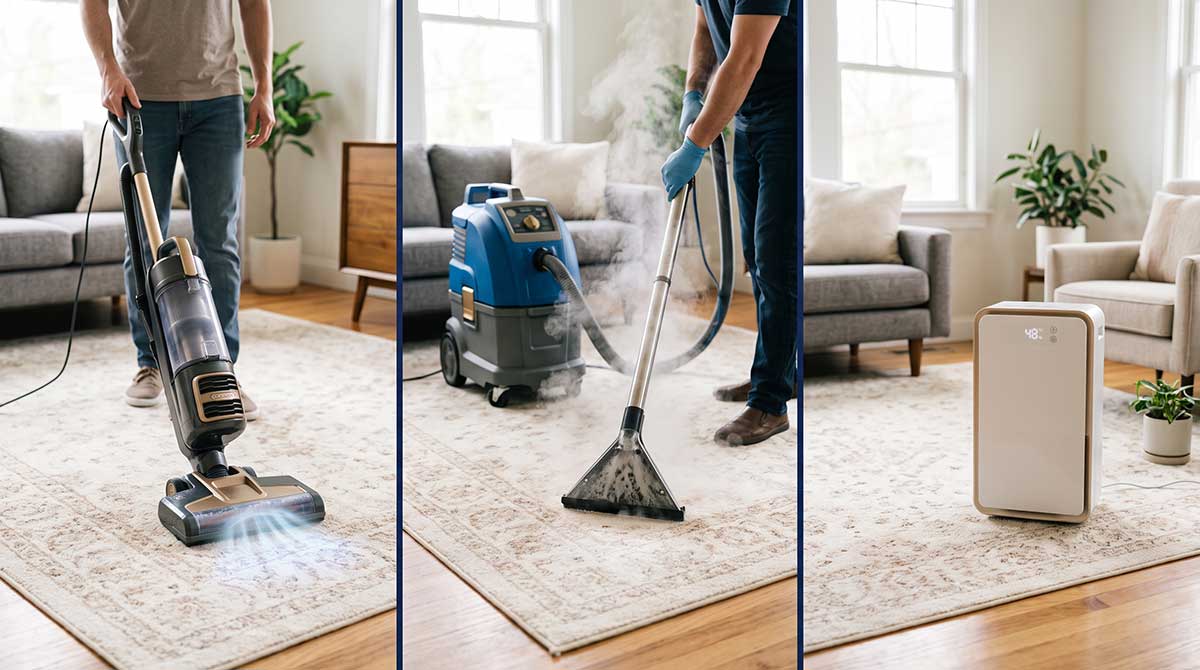
Two methods carry most of the load, and they serve different purposes.
- HEPA vacuuming during peak pollen weeks removes the surface layer before it compacts into the pile. HEPA filtration captures 99.97 percent of particles down to 0.3 microns instead of blowing them back into the room.2
- Hot water extraction, often called steam cleaning, reaches what vacuuming misses. Water above fifty to sixty degrees Celsius kills live dust mites and fungal spores on contact, and extraction pulls the loosened material out.
- Neither method sanitizes a carpet permanently. Dust mites repopulate once humidity climbs back above fifty percent, so cleaning works best alongside humidity control.
How Often To Clean Carpet For Allergies
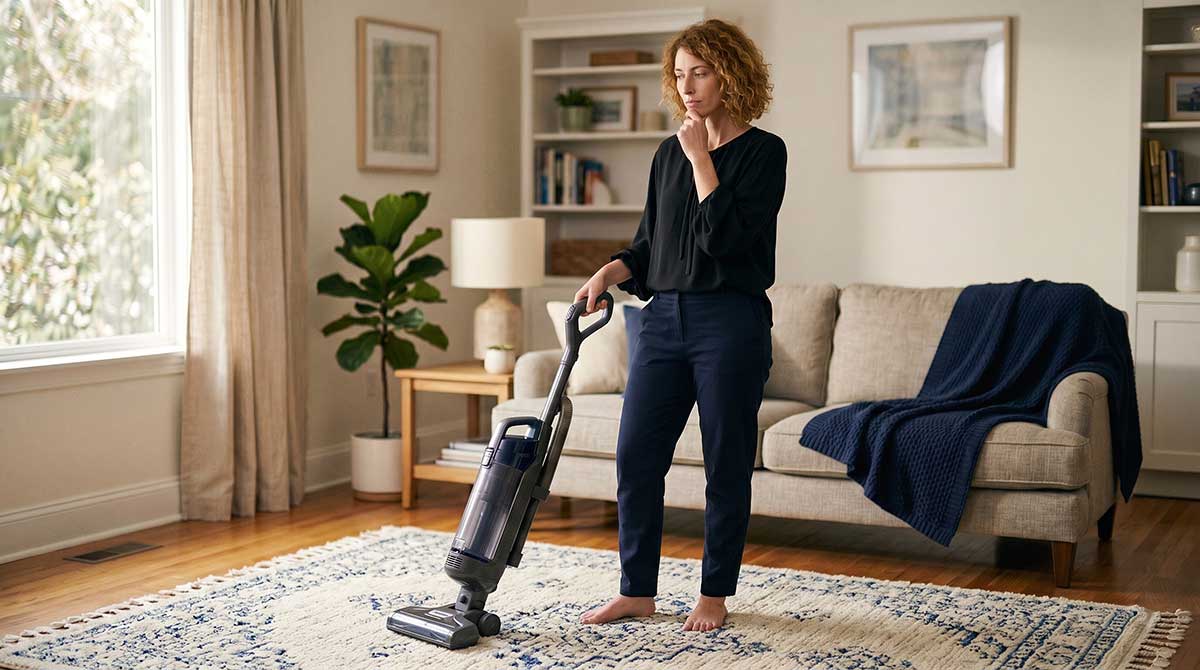
There is no single rule for how often you should clean a carpet, since conditions vary from home to home. The Carpet and Rug Institute suggests professional deep cleaning every twelve to eighteen months as a baseline, though several factors push that tighter.
- Pets shed dander continuously and track pollen indoors on their fur, which usually calls for vacuuming two to three times a week.
- Children and heavy foot traffic stir up more dust, so busy hallways need shorter cycles than a rarely used guest room.
- Anyone with asthma or a dust mite allergy tends to do better on a lower dust load, often meaning extraction every three to six months.
- Bedroom carpets deserve attention, since people spend hours right beside them while sleeping.
Professional Carpet Cleaning In Ottawa: When To Call In Help
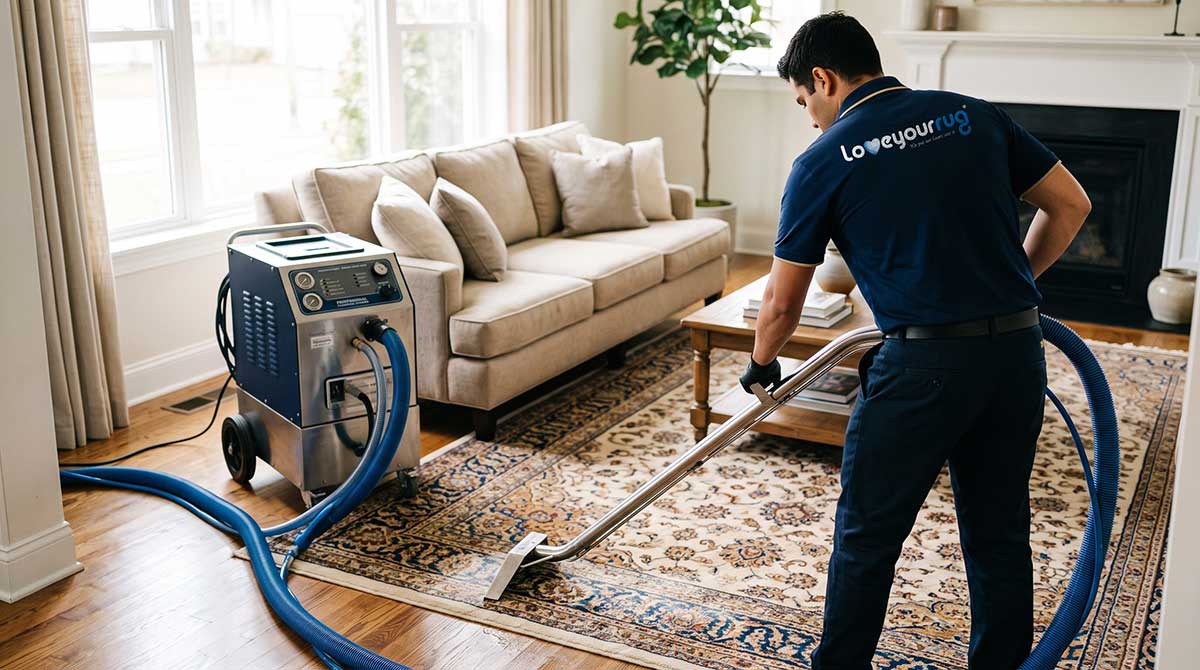
Professional carpet cleaning solves a lot of problems. A musty smell along the baseboards or visible mould points to fungal colonization that surface cleaning will not touch, and carpet soaked by sewage backflow or floodwater for more than forty eight hours usually needs replacing. If humidity sits above fifty percent regardless of cleaning frequency, dust mites will keep returning. If someone keeps having flare ups despite regular vacuuming and low pollen counts, the source may sit elsewhere: bedding, upholstery, or an area rug that seems easier to shake out than clean properly.
Rug cleaning uses gentler methods suited to natural fibres and delicate weaves, which matters for pieces that cannot handle the equipment used on broadloom. Beyond routine maintenance, an IICRC certified technician, a mould remediation specialist, or an allergist can pinpoint what a homeowner cannot diagnose alone.
Ottawa’s allergy season will keep its usual pattern of tree pollen in spring, grass through summer, and ragweed into fall, with carpet fibre quietly collecting a share of all three. Keeping that reservoir small, through regular vacuuming, humidity control, and periodic deep cleaning, stops indoor exposure from stacking on top of what is already floating around outside.
If your carpets or rugs have not had a proper clean in a while, get a free quote from Love Your Rug and see what a deeper clean could do for your allergy season.
References
- The Carpet and Rug Institute, Inc. “Carpet Improves Indoor Air Quality – the Carpet and Rug Institute.” The Carpet and Rug Institute, 5 July 2023, carpet-rug.org/indoor-air-quality.
- “What Is a HEPA Filter? | US EPA.” US EPA, 13 Jan. 2026, www.epa.gov/indoor-air-quality-iaq/what-hepa-filter.

Condo Living in Ottawa: Smart Rug Choices & Maintenance Tips
Ottawa’s condo towers pack thousands of residents into concrete and glass buildings that behave nothing like a detached house. Floors sit on shared slabs, hallways answer to fire code rules,

Ottawa Allergy Season: Can Dirty Carpets Make It Worse?
Seasonal allergic rhinitis affects roughly one in five people across Canada, and Ottawa sits well within that range. Clinics see more itchy eyes and sneezing every spring, mostly blamed on