


Relaxing while drinking a nice cup of tea in the morning can quickly turn into a stressful situation when the cup tips over and tea seeps into the carpet fibres. Some homeowners may choose to ignore the stain, hoping it will fade on its own or blend in over time, but tea stains rarely disappear without proper treatment.
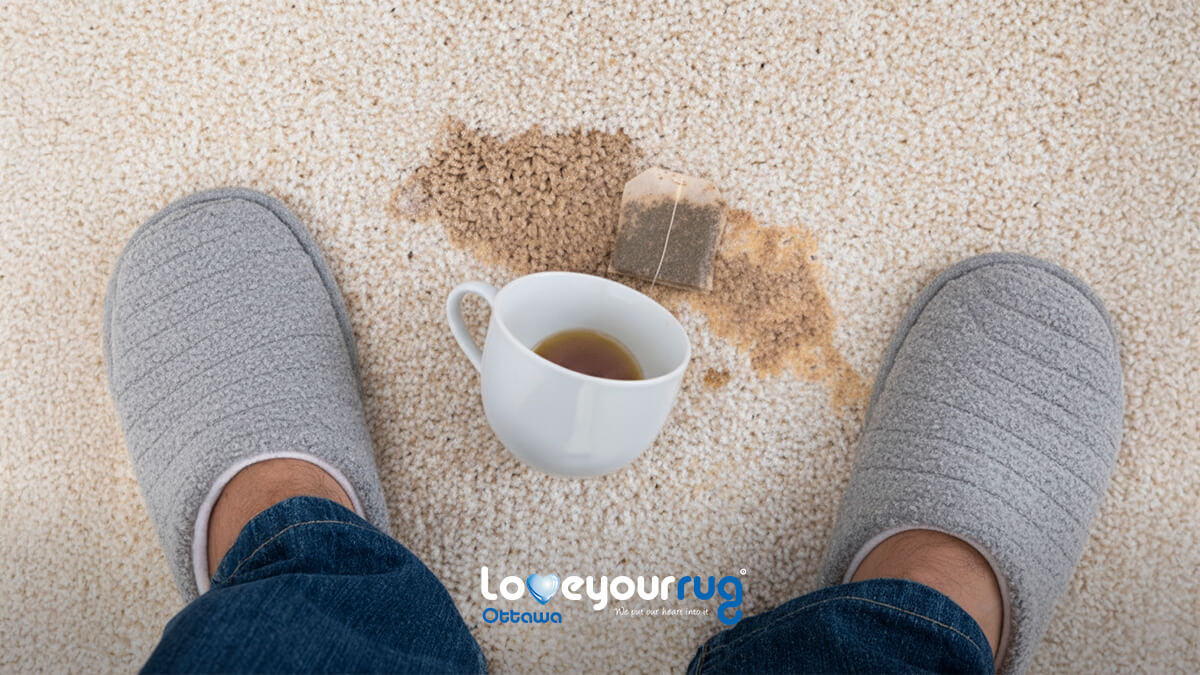
In this blog, we explain why it is important to deal with tea stains right away, the safest ways to remove them from carpet, and what to do when home cleaning methods are not enough.
Why Tea Stains on Carpets Are So Difficult to Remove
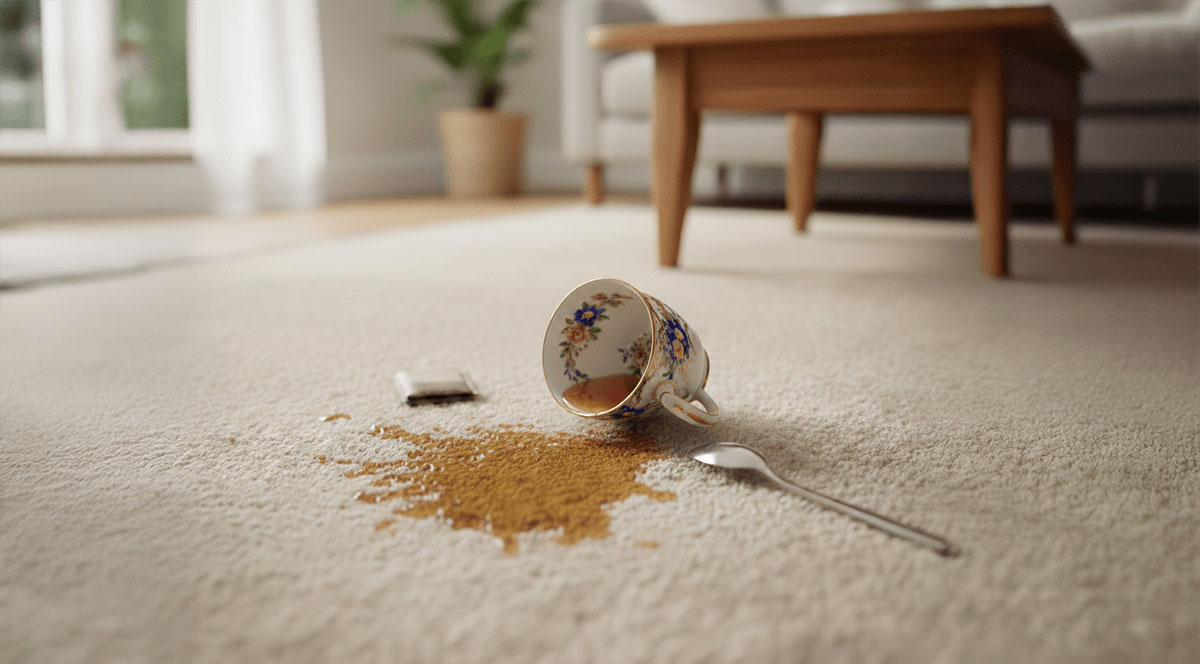
While tea stains may seem minor due to their subtle colour at first, many homeowners are surprised to find out how difficult they are to remove, especially after the stain has dried. This is mainly due to a natural compound teas have called tannins, which bind quickly to carpet fibres and leave behind stubborn discolouration.
Heat and time work against you when it comes to tea stains. Since tea is usually hot when it spills, the warmth allows the liquid to soak into the carpet fibres more quickly. Once the moisture dries, what is left behind is a concentrated patch of colour that becomes far more noticeable and difficult to remove.
First Thing To Do After You Get Tea Stains On Your Carpet
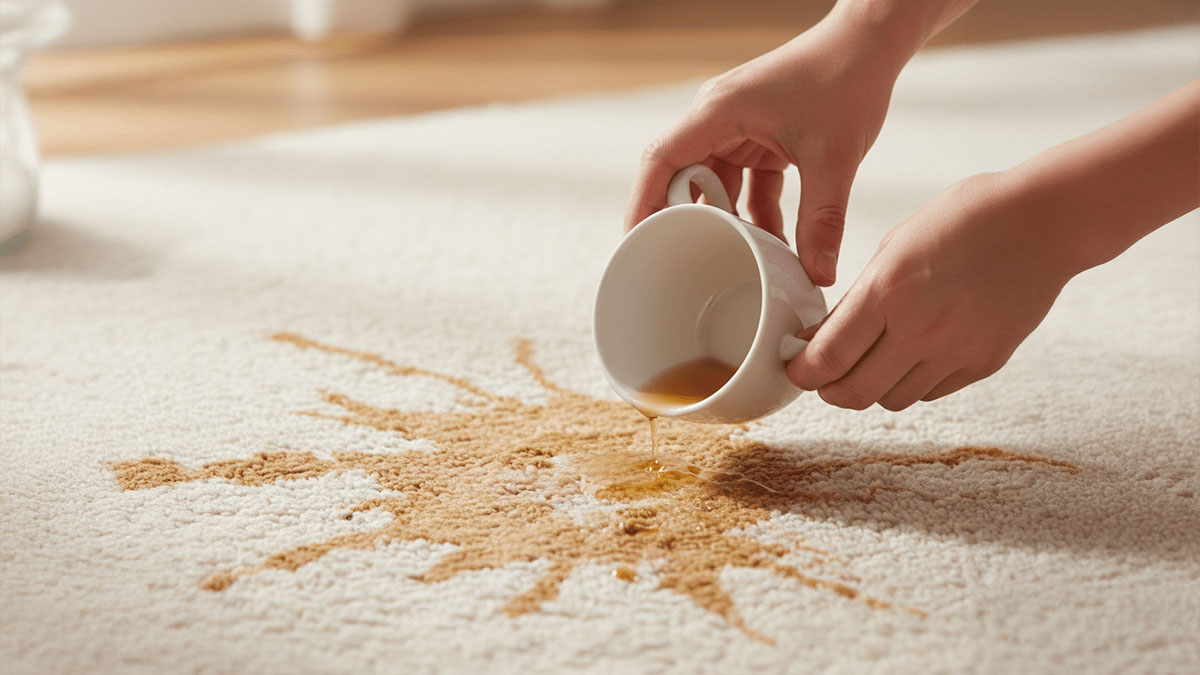
After spilling tea on your carpet, it’s important to move fast. Some homeowners make the mistake of using hot water and scrubbing their carpet aggressively in an attempt to fix the issue quickly, but this often pushes the stain deeper into the carpet fibres and makes it harder to remove later. Here’s what to do immediately after a spill to help remove tea stains from your carpet more effectively:
1. Blot the spill right away
Use a clean, dry cloth or paper towel to gently blot the area. Press down to absorb as much liquid as possible, working from the outside of the stain toward the centre. Avoid rubbing, as this can spread the stain.
2. Use cold or lukewarm water only
Lightly dampen a cloth with cold or lukewarm water and continue blotting the stain. This helps dilute the tea without setting the colour deeper into the fibres.
3. Keep blotting until no more colour transfers
Switch to a clean section of the cloth as it absorbs colour. Continue blotting until the tea stops transferring onto the cloth.
4. Let the area air dry
Once the stain has lightened, allow the carpet to dry naturally. Avoid using heat, as this can cause any remaining colour to set.
How to Remove Tea Stains From Carpet Using Safe At-Home Methods
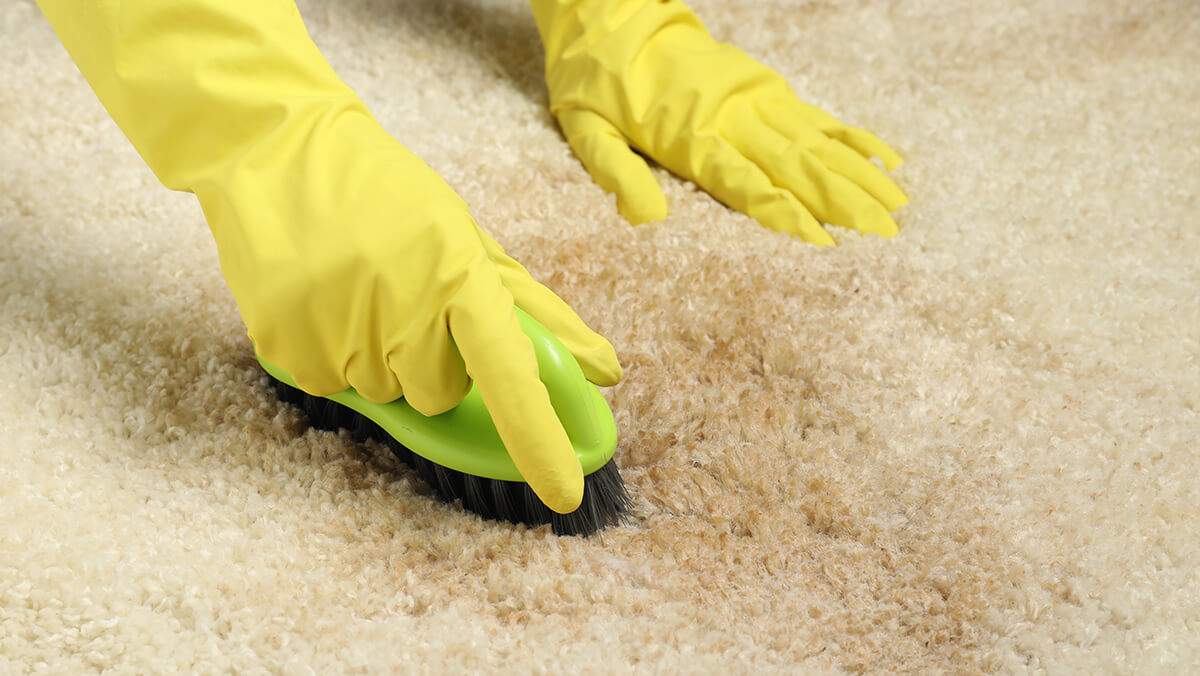
After blotting your carpet, the next step is to carefully clean the stained area using safe household solutions. There are different methods you can try at home, and the best choice depends on how long the stain has been there and how your carpet responds to moisture. Some of the most effective at-home methods include:
Method 1 – Mild Dish Soap Solution (Best for Fresh Stains)
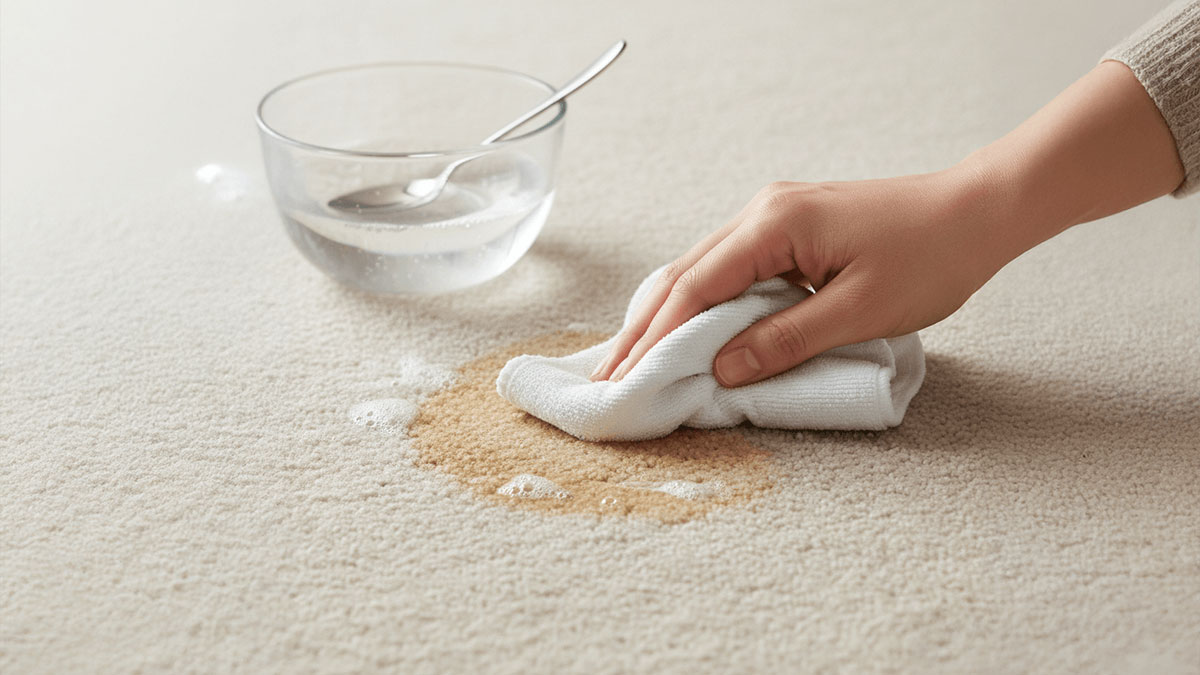
A mild dish soap solution is one of the safest ways to treat a fresh tea stain because it helps loosen residue without being harsh on most carpet fibres. This technique works best on synthetic carpets and rugs, such as nylon, polyester, and olefin, especially in low-pile or medium-pile styles. It can also work on many colourfast area rugs, as long as you test first.
- Mix your solution. Use lukewarm water with a few drops of mild dish soap. The soap helps break up residue, while the water helps dilute what remains in the fibres.
- Spot test first. Apply a small amount to a hidden area and blot with a white cloth. This confirms the rug dye will not bleed.
- Blot the stain with a damp cloth. Do not pour the solution directly onto the carpet. Blotting with a wrung-out cloth keeps the stain from soaking deeper.
- Work from the outside in. This helps prevent the stain from spreading into clean fibres.
- Repeat until the stain stops transferring. Replace the cloth area as it picks up colour so you are not reapplying it.
- Rinse and dry. Blot with plain water to remove soap residue, then press a dry towel onto the area and let it fully air dry.
Method 2 – Vinegar Solution (For Light to Moderate Stains)
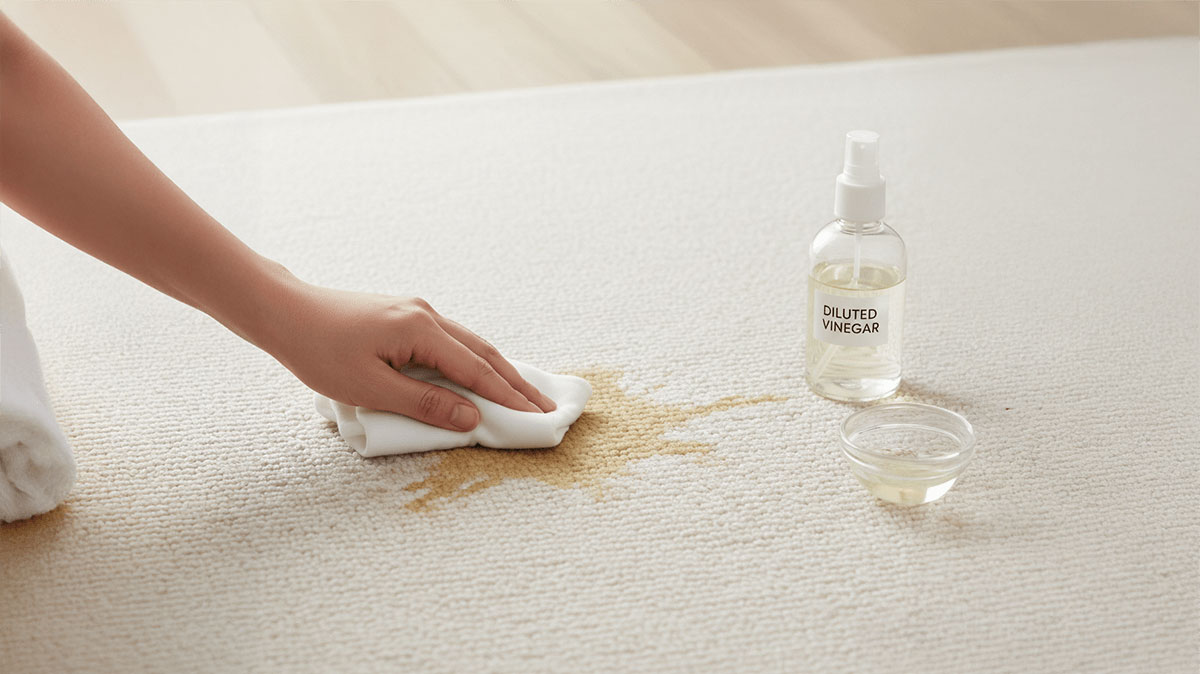
If blotting alone does not remove the tea stain, a vinegar solution can help with lighter stains that are still visible. Vinegar works by loosening the compounds that give tea its colour, but it needs to be used carefully.
Synthetic carpets and rugs that are colourfast, especially those made from nylon or polyester, are usually the best candidates for this technique. Diluted vinegar is less likely to cause issues when the pile is low or medium in height.
- Create the correct dilution. Mix one tablespoon of white vinegar with one cup of lukewarm water. This balance is strong enough to be effective while remaining gentle.
- Test for colourfastness. Apply the solution to a hidden area and blot with a white cloth. Stop if you see any colour transfer.
- Blot the stain carefully. Use a cloth dampened with the solution and press gently onto the stain. Do not pour the solution directly onto the carpet.
- Work patiently. Continue blotting and changing cloth sections until the stain begins to fade.
- Rinse the area. Blot with clean water to remove vinegar residue, which can attract dirt if left behind.
- Dry completely. Press a dry towel over the area and allow it to air dry before reassessing the stain.
If you have wool, silk, jute, or other natural fibre rugs, a vinegar solution is generally not a safe choice. This technique is also not recommended for handmade or antique rugs, where even diluted solutions may cause damage. For these, professional wool carpet cleaning is the safer route.
Method 3 – Baking Soda for Odour & Residue
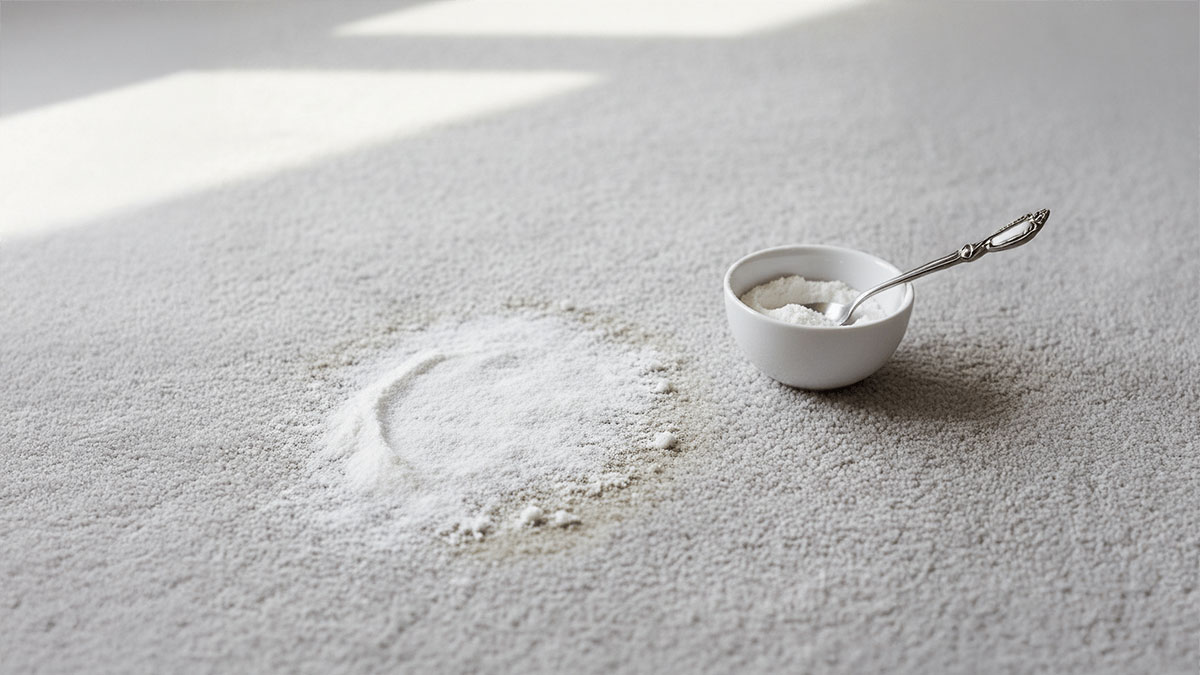
Baking soda is often used as a follow-up step after cleaning a tea stain. Its main purpose is to absorb remaining moisture and reduce odours, not to remove colour. Synthetic carpets and rugs with a low or medium pile tend to respond best to this method, as the baking soda can be removed thoroughly with regular vacuuming.
- Confirm the stain has been cleaned. Baking soda should only be applied after other cleaning methods have lifted the stain as much as possible.
- Allow the carpet to dry slightly. The area should be damp at most, never wet.
- Apply a thin layer. Sprinkle baking soda evenly across the area without rubbing it in.
- Let it sit undisturbed. Leave it in place for several hours or overnight.
- Vacuum completely. Remove all powder once the area is dry.
Important precautions
- Do not mix baking soda with water or vinegar, as this can create residue.
- Avoid applying too much baking soda solution as it may clog vacuum filters or remain in the fibres.
- If the carpet still smells or looks discoloured, professional treatment is often the safest next step.
What to Do if DIY Tea Stain Removal Isn’t Enough
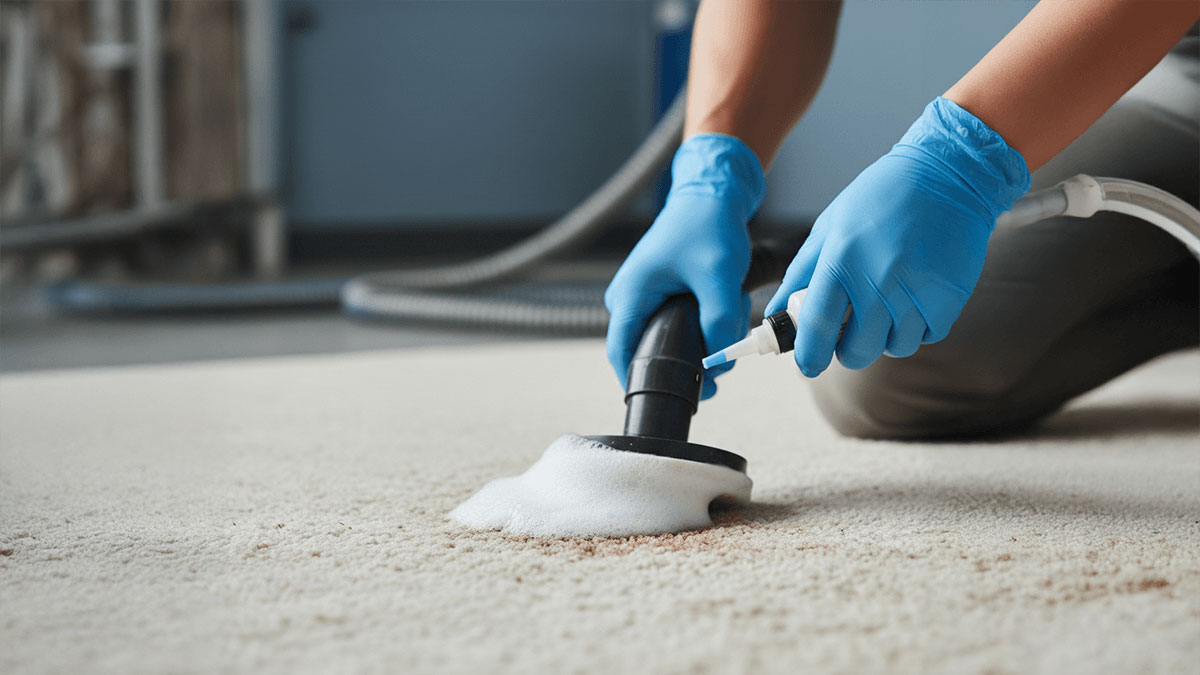
If stubborn tea stains won’t seem to go away after trying at-home cleaning methods, it may be time to consider opting for professional tea stain removal. Deep-set stains often need a more thorough approach than household products can provide. When tea has had time to settle into the carpet fibres, surface cleaning alone may no longer be effective.
Professional cleaning targets the stain at a deeper level. Instead of relying on repeated blotting or stronger household products, trained technicians assess the type of carpet or rug, the severity of the stain, and how the fibres are responding. This helps prevent further damage while improving the chances of complete stain removal.
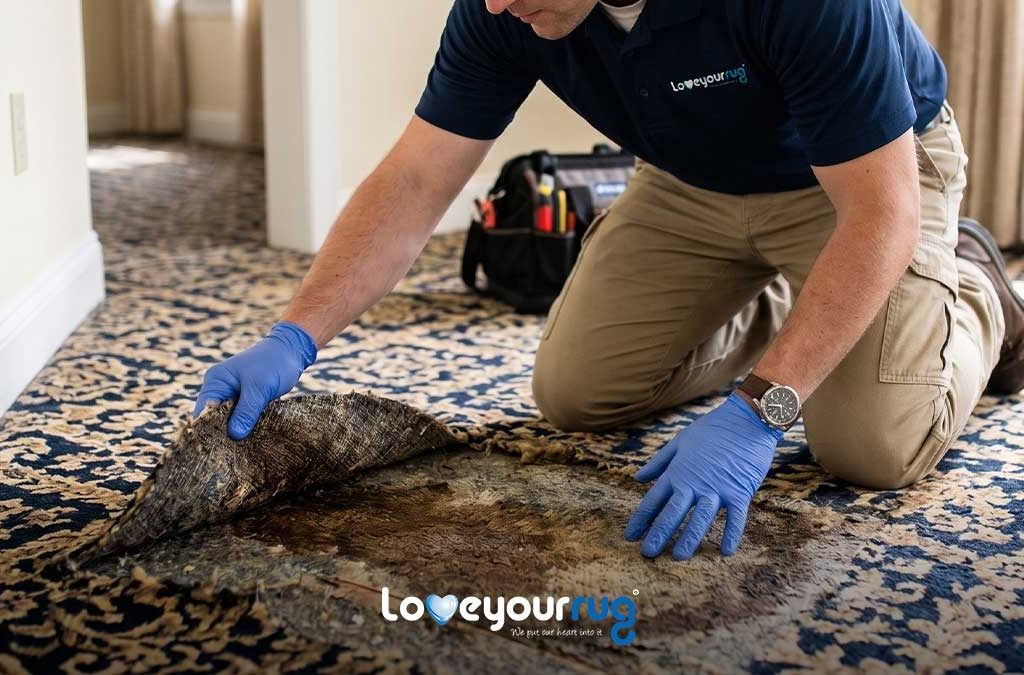
At Love Your Rug Ottawa, each carpet or rug is treated based on its specific needs. The cleaning process begins with a careful inspection, followed by specialized treatments designed to loosen and remove stubborn stains safely. This approach is especially important for delicate or valuable rugs, where improper cleaning can cause permanent discolouration or fibre damage.
Stubborn tea stains often require more than household solutions. With years of experience cleaning carpets and area rugs of all types, Love Your Rug Ottawa can help restore the look and feel of your flooring. Fill out our online form to get a free quote on your carpet cleaning.

Ottawa Allergy Season: Can Dirty Carpets Make It Worse?
Seasonal allergic rhinitis affects roughly one in five people across Canada, and Ottawa sits well within that range. Clinics see more itchy eyes and sneezing every spring, mostly blamed on
How Ottawa’s Humidity Levels Affect Mould Growth in Carpets
Ottawa summers push indoor air close to saturation. In July, the region’s monthly maximum relative humidity climbs to somewhere between 91 and 100%, and all that vapour presses inward through